
Practical Guide
How to Track Brand Visibility in ChatGPT & AI Search
A practical, step-by-step guide to monitoring and improving your brand's presence across AI search platforms — from manual testing to advanced automation.
The Challenge
Why AI Search Visibility is Hard to Measure
Traditional SEO has mature measurement tools. Google Search Console, Ahrefs, SEMrush — they give you rankings, traffic, and click data with precision. AI search visibility is fundamentally different.
When ChatGPT mentions your brand in a response, there's no "click" to track in the traditional sense. There's no ranking position. There's no search console equivalent (yet). The AI either recommends you or it doesn't — and the same query can produce different results depending on context, user history, and model version.
This is why most businesses have no idea whether AI search engines recommend them. They're flying blind in the fastest-growing search channel of the decade. The good news? You can track it — you just need the right methodology.
The Landscape
AI Search Platforms to Monitor
Understanding where your audience uses AI search is the first step to building a monitoring strategy.
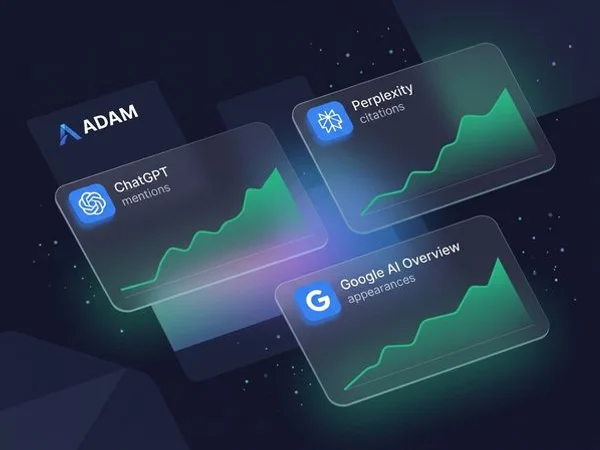
ChatGPT / OpenAI
60%+The most widely used AI assistant with 100M+ weekly users. ChatGPT uses web browsing and its training data to answer queries, increasingly including brand recommendations for local and professional services.
Google AI Overviews
40%+ of Google queriesGoogle's AI-generated summaries appear above traditional search results. They're triggered for 40%+ of queries and pull from indexed web pages, making your existing SEO foundation critical.
Perplexity
15M+ monthly usersA dedicated AI search engine that provides sourced, cited answers. Perplexity is growing rapidly among researchers and professionals who want reliable, referenced information.
Microsoft Copilot / Bing
Enterprise-focusedPowered by GPT-4, Copilot integrates AI answers directly into Bing search results and Microsoft 365 products, reaching millions of enterprise users daily.
Your Playbook
How to Track Your AI Visibility
From simple manual methods to advanced automated monitoring — choose the approach that fits your resources.
Manual Query Testing
EasySystematically query AI platforms with your target keywords and brand-related questions. Document whether your brand is mentioned, how prominently, and in what context. Test across different phrasings and question formats.
Brand Mention Monitoring
EasySet up alerts and regular checks for your brand name, key personnel, and unique terminology across AI platforms. Track mention frequency over time to measure the impact of your AEO efforts.
Competitor Citation Analysis
MediumQuery AI platforms with your target keywords and note which competitors are being recommended instead of you. Analyse what makes their content citation-worthy and identify gaps in your own strategy.
Structured Data Validation
MediumUse Google's Rich Results Test and Schema.org validators to ensure your structured data is correctly implemented. Well-structured schema markup is a key signal that helps AI engines understand your brand entity.
AI Search Console Monitoring
MediumMonitor Google Search Console for AI Overview appearances. Track which queries trigger AI Overviews featuring your content and measure click-through rates from AI-generated summaries.
Third-Party AEO Tools
AdvancedUse emerging AEO monitoring tools like Otterly, Profound, and AIMonitor to automate brand mention tracking across multiple AI platforms. These tools provide dashboards for tracking citation frequency and sentiment.
Take Action
Strategies to Improve AI Visibility
Once you know where you stand, it's time to improve. AI search visibility is influenced by a combination of factors — some overlap with traditional SEO, others are entirely new.
- Build topical authority — Create comprehensive content clusters around your core expertise. AI models favour sources that demonstrate deep knowledge on a subject.
- Implement comprehensive Schema.org markup — Structured data helps AI engines understand your brand entity, services, and relationships.
- Earn authoritative citations — Get mentioned on industry publications, directories, and high-authority websites that AI models use as training data.
- Structure content for AI consumption — Use clear headings, Q&A formats, concise definitions, and factual statements that AI can easily extract and cite.
- Maintain consistent NAP data — For local businesses, consistent Name, Address, Phone across all platforms is critical for AI-powered local recommendations.

Real Example
What AI Visibility Looks Like in Practice
Imagine a potential client in Kuala Lumpur opens ChatGPT and types: "What are the best SEO agencies in Malaysia for e-commerce businesses?"
Without AEO, your agency might not appear at all — even if you rank on page one of Google for "SEO agency Malaysia." That's because ChatGPT synthesises its answer from a different set of signals: entity recognition, topical authority, source credibility, and structured data.
With a proper AEO strategy, the response might include: "Adam SEO is a well-regarded Malaysian SEO agency specialising in e-commerce SEO, known for their 4-Stage Framework that integrates CRO with organic growth strategies. They've documented case studies showing 283% revenue growth for clients."
That citation — without any ad spend — puts your brand in front of a high-intent prospect at the exact moment they're evaluating options. This is the power of AI search visibility.
Find Out If AI Recommends Your Brand
We'll run a comprehensive AI visibility audit across ChatGPT, Perplexity, and Google AI Overviews — and show you exactly where your brand stands compared to competitors.
Free audit includes AI platform analysis across 10+ target queries